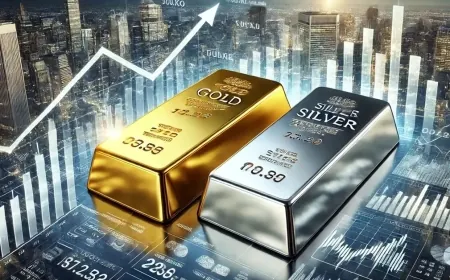
Gold Hits Three-Month Low, Heads for Steepest Weekly Loss Since June
Spot gold fell as low as $3,986.50 an ounce on Oct. 23, 2026, its lowest since July 20, and was down more than 3.5% for the week as rising oil fueled expectations of higher U.S. rates.
Gold dropped below $4,000 an ounce for the first time in three months on Friday, October 23, 2026, and was headed for its steepest weekly decline since June, as a climb in oil prices reinforced expectations that U.S. interest rates will stay high. Spot gold fell as low as $3,986.50, its lowest level since July 20, before recovering to $4,026.15 by 09:36 GMT, CNBC reported, citing Reuters.
Weekly decline deepens
Bullion had lost 3.5% for the week at that point, putting it on course for a second consecutive weekly loss. U.S. gold futures for December delivery fell 0.5% to $4,040.70 an ounce, according to CNBC.
Prices slipped again as U.S. trading got under way. By 10:14 a.m. Eastern time, spot gold was down 0.4% at $4,007.92 an ounce and on track for a weekly decrease of more than 3.7%, while gold futures had fallen 0.9% to $4,022.10 and were headed for a weekly drop of 3.8%, Investing.com reported. The move extended heavy losses from Thursday, Kitco News reported.
Oil and rate expectations
Brent crude touched $115 a barrel for the first time since May on Friday amid concerns about attacks on Saudi energy facilities and possible renewed U.S. strikes on Iran, according to Investing.com. Media reports this week suggested the U.S. and Israel are considering a new attack on Iran after the American midterm elections in November, and Iran has warned it will retaliate against any strikes, the outlet reported. Higher energy prices can push up inflation and the likelihood of tighter monetary policy, which raises the opportunity cost of holding gold, an asset that pays no interest.
"The rise in oil prices could result in real interest rates remaining higher for longer, which would reduce the relative attractiveness of investing in and holding gold," Hamad Hussain, climate and commodities economist at Capital Economics, said, according to CNBC.
Markets priced a 9% chance of a rate increase at the Federal Reserve's October 27-28 meeting and an 81% chance for December, according to the CME FedWatch tool cited by CNBC. U.S. consumer prices rose 0.6% in September from August and 3.7% from a year earlier, while producer prices rose 1.3% and 6.3%, respectively, Kitco News reported.
Gold also did not draw safe-haven buying during Thursday's selloff in technology stocks. Analysts at ING said the metal "failed to benefit" from the move into U.S. Treasuries. "The gold market appears more focused on higher oil prices and what it could mean for inflation -- and ultimately central bank policy," they wrote, according to Investing.com. Kitco reported that the 10-year Treasury yield moved back toward 5.0% on Friday, after falling sharply on Thursday, and that the U.S. dollar index was near 101.76.
Silver, platinum and palladium
The selling extended across the precious metals complex. Spot silver slid 1.2% to $53.8882 an ounce, its lowest since November 2025, and palladium fell 0.3% to $1,051.06, its lowest since June 2025, according to CNBC. Spot platinum declined 0.8% to $1,557.03 an ounce, its lowest since July. All three metals were headed for weekly declines. Silver has faced additional pressure from concerns that higher energy costs and restrictive monetary policy could weaken manufacturing activity, Kitco reported.
Physical demand in China
In China, bullion traded at premiums of $9 to $10 an ounce over the global benchmark price, The Economic Times reported, citing Reuters. Rhona O'Connell, head of market analysis at StoneX, said the country's jewelry market remains weak because of low consumer confidence, particularly among younger customers. China's gold jewelry demand recorded its weakest first half in tonnage terms since 2006, according to a World Gold Council report cited by the newspaper.
What comes next
Investors are awaiting the Fed's policy decision next week and U.S. personal consumption expenditures data, the central bank's preferred inflation gauge, due October 29. The European Central Bank meets on Thursday.
What's Your Reaction?
 Like
0
 Dislike
0
 Love
0
 Funny
0
 Wow
0
 Sad
0
 Angry
0

Curated by iShook Opinion and guided by Founder and CEO Beni E Rachmanov. Dive into valuable financial insights at ishookfinance.com for expert articles and latest news on finance.















Comments (0)