











































Korea Zinc Board to Review U.S. Smelter Proposal Worth $6.8 Billion
Korea Zinc’s board will review a proposal to build a $6.8 billion smelter in the United States to process zinc, antimony, and germanium.

Korea Zinc’s board will review a proposal to build a large smelting facility in the United States, a project that people familiar with the discussions say would be developed with U.S. companies and involve the U.S. government.
The proposed facility is valued at about 10 trillion won ($6.8 billion) and would refine zinc, antimony, germanium, and other minerals that are essential inputs for semiconductors, telecommunications equipment, and military hardware. Korea Zinc is the world’s largest zinc smelting company, and the project would mark one of its most significant investments outside South Korea.
According to people briefed on the plan, the smelter would be designed to process raw materials sourced outside China, addressing concerns in Washington about supply concentration and export controls. China currently dominates global production and processing of antimony and germanium, two minerals that have drawn increased attention from defense planners and chipmakers.
Shares of Korea Zinc rose about 11% in morning trading after reports of the board discussion. The market reaction came despite strong opposition from major shareholders who are pressing for changes in the company’s leadership.
Investment structure under review
People familiar with the proposal say U.S. government entities and U.S. defense-related companies would invest roughly 1 trillion won in the joint venture. In addition, the U.S. side would acquire around a 10% stake in Korea Zinc. Such an arrangement would be unusual, as the U.S. government rarely takes equity positions in foreign industrial companies, particularly in the mining and smelting sector.
Most of the remaining capital needed for the project would be raised through borrowings, according to the same sources. The scale of the financing makes the project one of the largest overseas industrial investments by a South Korean metals producer.
Korea Zinc has not issued an official comment. The people discussing the matter asked not to be identified because the board has not yet made a decision.
Major shareholders oppose proposal
The proposal has intensified an ongoing dispute between Korea Zinc’s management and its largest shareholders. Young Poong Group, together with private equity firm MBK Partners, controls about 41% of the company’s voting rights.
Young Poong has criticized the U.S. smelter plan, arguing that management is seeking strategic allies to reinforce its position rather than addressing governance concerns raised by shareholders. Earlier this year, Young Poong and MBK attempted to secure a majority of board seats but failed, leaving control with the current leadership.
The disagreement has kept corporate governance and capital allocation under scrutiny as Korea Zinc evaluates large, long-term investments.
China export restrictions on key minerals
China’s dominance of critical minerals has become a central issue for governments and manufacturers. Antimony and germanium are used in infrared optics, satellite systems, semiconductors, and military communications equipment.
In December 2024, China restricted exports of antimony and germanium to the United States following U.S. measures targeting China’s chip industry. Although those restrictions were later suspended, the move highlighted the vulnerability of supply chains that depend on a single country.
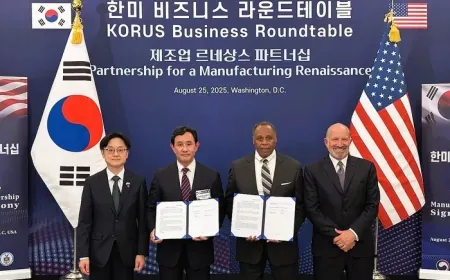
Korea Zinc has already taken steps to address these risks. In August, the company agreed with Lockheed Martin to produce germanium from 2028 using raw materials sourced outside China, signaling a shift toward alternative supply routes.
The proposal would add U.S.-based processing capacity for zinc, antimony, and germanium and expand Korea Zinc’s operations beyond China-linked supply chains.
Also Read: South Korea, U.S. Finalize Foreign Exchange Deal for $350B