S&P 500 Posts Best Week Since April 2025 and Dow Its Biggest Weekly Gain Since 2022 After Black Friday Rally, but November Is Still Headed for Worst Showing Since 2008
The S&P 500 rose 1.60% to 7,297.49 in Friday's half-day session and gained 5.6% for the week, its best since April 2025, while the Dow added 5.46% for its biggest weekly gain since October 2022; the S&P 500 is still down about 3.7% in November with one session left.
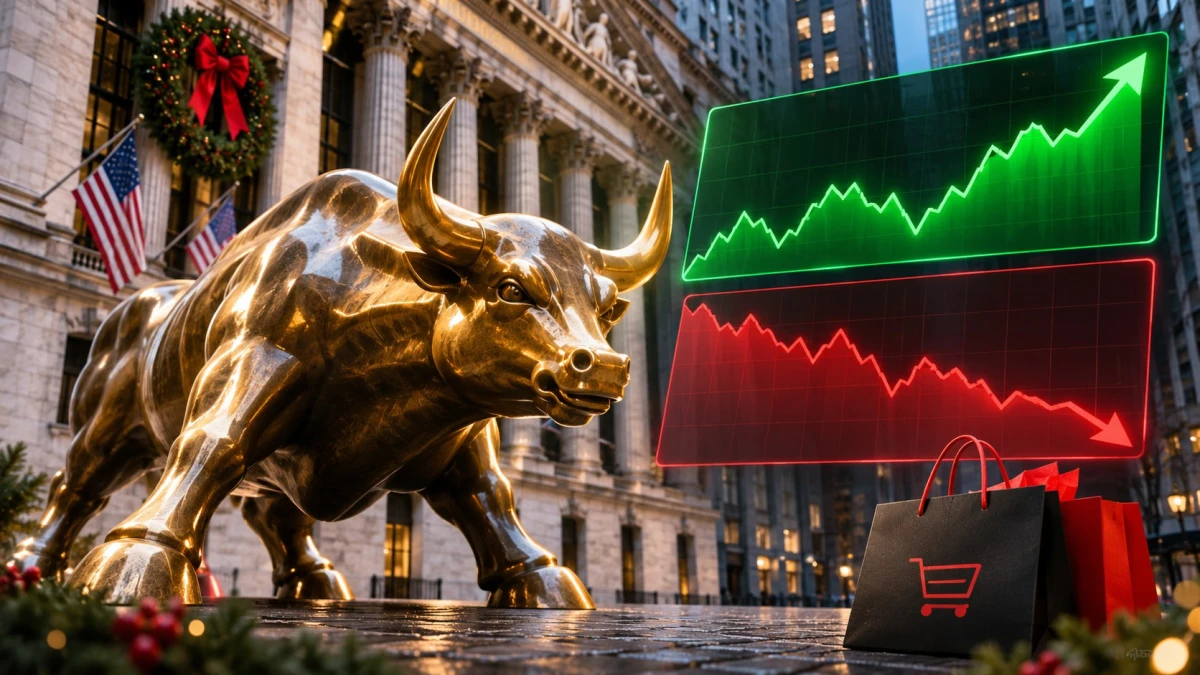
U.S. stocks closed higher in Friday's holiday-shortened session on Nov. 27, 2026, capping the S&P 500's best week since April 2025 and the Dow Jones Industrial Average's biggest weekly gain since October 2022. Even after the rebound, the S&P 500 and the Nasdaq Composite remain on track for their worst November since 2008, with one trading day left in the month. U.S. markets are closed on Saturday; all figures below are official closes from Friday's session, which ended early at 1 p.m. ET after Thursday's Thanksgiving holiday.
Friday's closing levels
The Dow rose 591.99 points, or 1.18%, to 50,774.94, the S&P 500 gained 114.71 points, or 1.60%, to 7,297.49, and the Nasdaq Composite advanced 543.70 points, or 2.31%, to 24,129.50, Reuters reported. For the week, the S&P 500 gained 5.6%, the Nasdaq rose 6.68% and the Dow climbed 5.46%, according to Reuters.
CNBC reported that the Dow's advance was its biggest weekly gain since October 2022 and that the Nasdaq's was its largest since April. The rebound marked a sharp turnaround from the previous week, when the S&P 500 finished more than 10% below the all-time high it set in October, the Associated Press reported. The week opened with Monday's rally, the market's best day since April 2025, followed by more modest gains and losses on Tuesday and Wednesday, according to the AP.
Chipmakers and AI shares lead
Semiconductor stocks that had been hit hard this month led Friday's advance. The broader chip index rose 4.7%, with Micron up 7.6% and Marvell up 7.3%, while Nvidia, after trading weak for most of the session, ended 0.8% higher, Reuters reported. Data-storage company Sandisk surged almost 16%, and optical-products maker Lumentum and server maker Dell also rose sharply. Tesla gained 5%.
Meta Platforms rose more than 3%, Amazon about 4% and Broadcom almost 4%, according to CNBC, which also reported that shares of Anthropic, which went public this month, added nearly 11%. The S&P 500 bank index rose 1.6%, helped by a gain of almost 2% in JPMorgan Chase, Reuters said.
The gains were broad. About four out of every five stocks in the S&P 500 rose, the AP reported. Advancing issues outnumbered decliners by a 3.25-to-1 ratio on the NYSE and by 3.24-to-1 on the Nasdaq, and the S&P 500 posted 12 new 52-week highs and no new lows, according to Reuters. Volume on U.S. exchanges was 10.97 billion shares.
"The market is so oversold that a bounce was inevitable," Jamie Cox, managing partner at Harris Financial Group, told Reuters. Andrew Slimmon, senior portfolio manager at Morgan Stanley Investment Management, told Reuters that "so much fast money has delevered out of tech that this could have persistence next week as they are forced to chase back in."
November still deep in the red
The weekly rally has erased only part of the month's losses. Based on the Oct. 30 closes reported by Reuters of 7,580.07 for the S&P 500, 25,437.00 for the Nasdaq and 51,770.31 for the Dow, the S&P 500 is down about 3.7% in November, the Nasdaq about 5.1% and the Dow about 1.9%. Reuters attributed the monthly pressure to concerns about tougher AI regulation after Democrats' midterm election victory and expectations that monetary policy will remain restrictive.
Since its record high on Oct. 6, the S&P 500 was last down 7% and the Nasdaq about 13%, Reuters reported in its weekly outlook. The Cboe Volatility Index, known as Wall Street's fear gauge, was last around 24, above its long-term median of 17.6, and futures tied to the index remained in backwardation, with near-term contracts trading above later-dated ones.
The week ahead
Monday, Nov. 30, is the last trading day of November. The November employment report, due Friday, Dec. 4, is expected to show an increase of 90,000 jobs and an unemployment rate of 4.1%, according to economists polled by LSEG, after payrolls rose 165,000 in October, Reuters reported. The Federal Reserve is widely expected to raise interest rates by a quarter percentage point at its Dec. 8-9 meeting, and Fed Governor Christopher Waller recently called for either a half-point increase in December or a faster pace of increases in 2027, according to Reuters.
Nvidia CEO Jensen Huang is scheduled to testify on Thursday before the Senate Banking Committee, and quarterly results from Salesforce and Marvell Technology are due during the week, Reuters said. The ISM manufacturing index and JOLTS job openings data are scheduled for Tuesday and the ISM services index for Thursday, Capital Market reported.
What's Your Reaction?
 Like
0
 Dislike
0
 Love
0
 Funny
0
 Wow
0
 Sad
0
 Angry
0

Curated by iShook Opinion and guided by Founder and CEO Beni E Rachmanov. Dive into valuable financial insights at ishookfinance.com for expert articles and latest news on finance.












Comments (0)