Black Friday Online Sales Finish at a Record $13.1 Billion as Mastercard Sees Store Spending Rise 3.8%; Cyber Monday Set to Be the First $15 Billion Online Day
U.S. Black Friday online spending reached a record $13.1 billion, up 11.1%, according to Adobe's final tally, while Mastercard SpendingPulse said total retail sales excluding gas and autos rose 5.8% and in-store sales 3.8% even as foot-traffic trackers counted fewer visits; Adobe expects Cyber Monday online spending of $15.1 billion.

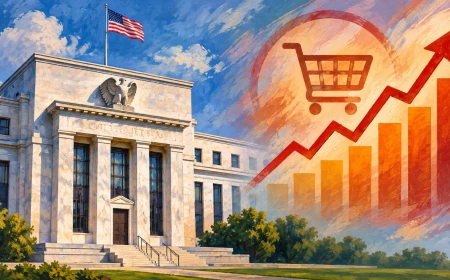
U.S. shoppers spent a record $13.1 billion online on Black Friday, Nov. 27, 2026, up 11.1% from a year earlier, according to final figures from Adobe Digital Insights, topping the roughly $12.9 billion the company had forecast. Separate preliminary data from Mastercard SpendingPulse showed total U.S. retail sales, in stores and online, rising 5.8% on the day, even as several foot-traffic trackers counted fewer store visits than last year. Attention now turns to Cyber Monday, Nov. 30, which Adobe expects to become the first single day to exceed $15 billion in U.S. online spending.
Online spending beats the forecast
The final Adobe total completes the running tally the company published on Friday evening. Reuters reported that shoppers bought popular toys and AI-powered gadgets and used discounts on apparel and appliances, while also stocking up on everyday essentials such as cleaning supplies, pet care products and personal hygiene items. Electronics and gaming were among the strongest-selling categories, according to the Adobe report cited by Reuters.
Salesforce, which uses a different data set, said global online sales reached a record $82.7 billion on Black Friday, up 5% from last year, including $19.1 billion in the United States, the Associated Press reported. Salesforce also said the volume of Black Friday orders rose 5% year over year, an indication that higher prices did not account for all of the sales growth. The AP noted that Salesforce bases its figures on shopping data from more than 1.5 billion consumers worldwide, while Adobe relies on more than 1 trillion visits to U.S. retail sites, which could explain the gap between the two companies' U.S. totals.
Store sales up, store visits down
According to Mastercard SpendingPulse, U.S. retail sales excluding gasoline and autos rose 5.8% on Black Friday compared with Black Friday 2025. E-commerce spending climbed 13.4%, and in-store spending rose 3.8%, which Mastercard said was the strongest Black Friday for in-store sales since 2022. SpendingPulse measures all payment types, including cash, and is not adjusted for inflation.
Electronics and software spending rose 7.9% on Black Friday, after jumping 37.9% on Nov. 18 and 43.5% on Nov. 19, the week Grand Theft Auto VI and other video games were released, Mastercard said. Apparel spending grew 4.4% and jewelry 4.6%. "Black Friday showed an adaptable consumer who remains willing to spend while being thoughtful about where, when and how they do so," said Michelle Meyer, chief economist at the Mastercard Economics Institute.
Foot-traffic counters reported declines of different sizes. RetailNext said initial data showed customer counts down 2.9% from 2025, and Sensormatic Solutions said retail foot traffic fell 4.2% from the previous Black Friday but was up 250% from the Friday a week earlier, according to the AP. Geospatial analytics company PassBy put store visits down 2.2% at nearly 930 million, Reuters reported. The three firms use different methods, and their figures are not directly comparable.
Joe Shasteen, global manager of advanced analytics at RetailNext, told the AP that the squeeze on essentials such as gas, groceries and rent "changes how they plan every shopping trip."
Inflation in the numbers
Meyer said Mastercard expects about half of this year's predicted growth in holiday-season sales to come from inflation, the AP reported. Inflation is running at 3.8%, according to Reuters. Writing about the consumer more broadly, Bloomberg reported that results at Walmart, Target, Best Buy and Kohl's have beaten expectations in recent weeks and that the Conference Board's latest reading showed consumer confidence at its highest in nearly two years.
What to expect on Cyber Monday
Adobe forecasts U.S. online spending of $15.1 billion on Cyber Monday, up 6.2% from last year, and about $47.5 billion across the five days from Thanksgiving through Cyber Monday. Buy now, pay later services are expected to account for $1.09 billion of Cyber Monday online spending, up 5.3%, and traffic to retail sites from AI chatbots and AI-enabled browsers is converting into purchases 68% more effectively than a year ago, according to Adobe data cited by Reuters.
Salesforce has forecast that Cyber Week, which it defines as Tuesday, Nov. 24, through Monday, Nov. 30, will generate a record $357 billion in global online sales, up 6%, and $84 billion in the United States, also up 6%, according to a Nov. 19 release. It expects $75.8 billion of global Cyber Week sales to be influenced by AI and shopping agents.
The National Retail Federation's pre-holiday survey projected that 182.7 million consumers would shop over the Thanksgiving weekend, down from 186.9 million last year, with 66.1 million planning to shop on Cyber Monday. The NRF is scheduled to discuss holiday shopping results on Tuesday, and Costco reports monthly sales on Wednesday, Seeking Alpha reported. Macy's is due to report third-quarter results on Wednesday, Dec. 2.
What's Your Reaction?
 Like
0
 Dislike
0
 Love
0
 Funny
0
 Wow
0
 Sad
0
 Angry
0

Curated by iShook Opinion and guided by Founder and CEO Beni E Rachmanov. Dive into valuable financial insights at ishookfinance.com for expert articles and latest news on finance.
















Comments (0)