
Fed Officials Signal More Rate Hikes After Hot October CPI as Logan Says a Faster Pace May Be Possible
After October core CPI rose 0.3% again, Fed officials Logan, Bowman and Paulson said more rate hikes are needed, with Logan saying the Fed may move faster this winter.
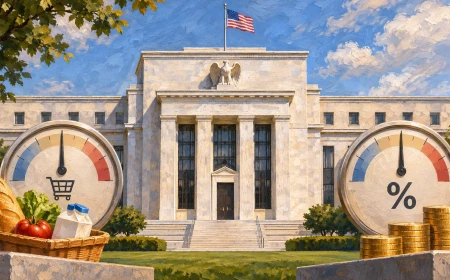
Several Federal Reserve policymakers signaled on Tuesday, Nov. 10, 2026, that more interest rate increases are coming, after a hotter-than-expected October consumer price index showed underlying inflation holding at a 0.3% monthly pace for a third straight month. Dallas Fed President Lorie Logan said the central bank may be able to move faster than it has this fall, while Vice Chair for Supervision Michelle Bowman and Philadelphia Fed President Anna Paulson both said further tightening is needed.
The data behind the shift
The Bureau of Labor Statistics said the CPI rose a seasonally adjusted 0.4% in October, down from 0.6% in September but above the 0.3% gain economists surveyed by Dow Jones had expected, CNBC reported. Core CPI, which excludes food and energy, rose 0.3% against a forecast of 0.2%. The agency did not publish a year-over-year rate because the federal government shutdown in October 2025 prevented it from collecting enough data for a comparable figure.
Within the report, the energy index rose 0.7% and gasoline 1%, while food prices climbed 0.5%, including a 0.9% increase for beef. Transportation services jumped 0.8%, and shelter rose 0.3%, accounting for more than 30% of the headline increase. Used car and truck prices fell 1.2%. Reuters said the report cemented expectations that the Fed will raise rates in December.
Logan: a quicker pace "may be possible"
Speaking at an energy conference she co-hosted with Kansas City Fed President Jeffrey Schmid, Logan said it "may be possible to move more rapidly" than the pattern the Fed has followed this fall, a quarter-point increase in September followed by a hold in October, according to Reuters, via Investing.com. She said the Fed needs to raise rates by at least another half percentage point before pausing to take stock.
"The goal should be to make policy modestly restrictive so we can sustainably deliver both maximum employment and stable prices," Logan said, adding that the current federal funds target range of 3.75% to 4.00% is too low and "adding to inflationary pressures." Yahoo Finance reported that Logan, citing Dallas Fed estimates, said the policy rate sits about 25 basis points below the neutral level that neither slows nor stimulates growth.
Schmid said inflation is "top of mind" for him and described the policy rate as "fairly accommodative." He polled conference attendees on whether the Fed should cut, hold or raise rates in December; none chose a cut, and a large majority chose a hike, according to Reuters.
Bowman: inflation is broadening
Bowman, speaking at the Council on Foreign Relations in Washington, said "inflation pressures have persisted for longer than I had hoped and have shown recent signs of broadening," Yahoo Finance reported. "This indicates that there is still work to do to bring inflation closer to 2%," she said, adding that the day's CPI data "suggest that inflation pressures may persist for longer."
Bowman estimated that core personal consumption expenditures inflation, the Fed's preferred gauge, likely rose to 3.3% in October from 3.1% in September, driven by energy costs and the artificial intelligence build-out. She said she expects tariff effects to fade and energy prices to come down when the Middle East conflict is resolved, but that AI-related inflation could persist.
She also flagged risks on the other side. Bowman said tighter financial conditions from falling stock prices and higher bond yields could weigh on the economy, and that a sharp correction in AI-company shares, if AI revenues fall short of rising costs, could lead to higher financing costs and reduced access to credit. Reuters noted she "did not sound in a hurry" about the pace of increases.
Paulson: "further gradual tightening"
Paulson, who votes on the Federal Open Market Committee this year, said in prepared remarks that "further gradual tightening seems appropriate," Reuters reported via StreetInsider. She said the October CPI "suggests inflation pressures are still very much with us," and named tariffs, energy prices and AI investment as drivers.
"I continue to believe monetary policy needs to be somewhat restrictive to bring inflation back to 2 percent," Paulson said. She added that she "would want to act more quickly if inflation expectations drift up, if wage pressures build, or if underlying inflation moves higher."
How markets repriced
The remarks followed Governor Christopher Waller's comments earlier on Tuesday that a half-point increase should be considered at the Dec. 8-9 meeting if core CPI rose 0.3% or more. According to Reuters, the CPI data and Waller's comments drove a broad Treasury selloff, with the two-year yield posting its biggest rise since early April 2025. Market pricing for a half-point December hike reached about 15% by mid-morning before easing to about 10% in the late afternoon, and traders added bets on three quarter-point increases by mid-2027 rather than two.
Yahoo Finance reported that investors were assigning about 90% odds to a quarter-point increase in December and about 9% to a half-point move. Omair Sharif, president of Inflation Insights, wrote that the data put core PCE on track for a 0.34% rise in October, which Reuters said would equal a 4% annualized pace.
What comes next
The FOMC next meets Dec. 8-9. The Moody's Analytics economic calendar lists the November CPI release for Dec. 10, 2026, the day after the meeting ends.
What's Your Reaction?
 Like
0
 Dislike
0
 Love
0
 Funny
0
 Wow
0
 Sad
0
 Angry
0

Curated by iShook Opinion and guided by Founder and CEO Beni E Rachmanov. Dive into valuable financial insights at ishookfinance.com for expert articles and latest news on finance.














Comments (0)