UK Inflation Rises to 3.6% in October, a One-Year High, as Record Diesel Prices Offset the Weakest Food Inflation Since 2021
U.K. consumer prices rose 3.6% in the year to October, up from 3.5% and the highest in a year, as diesel hit a record 199.5 pence a litre, while core inflation held at 2.8% and markets trimmed bets on a December Bank of England rate hike.
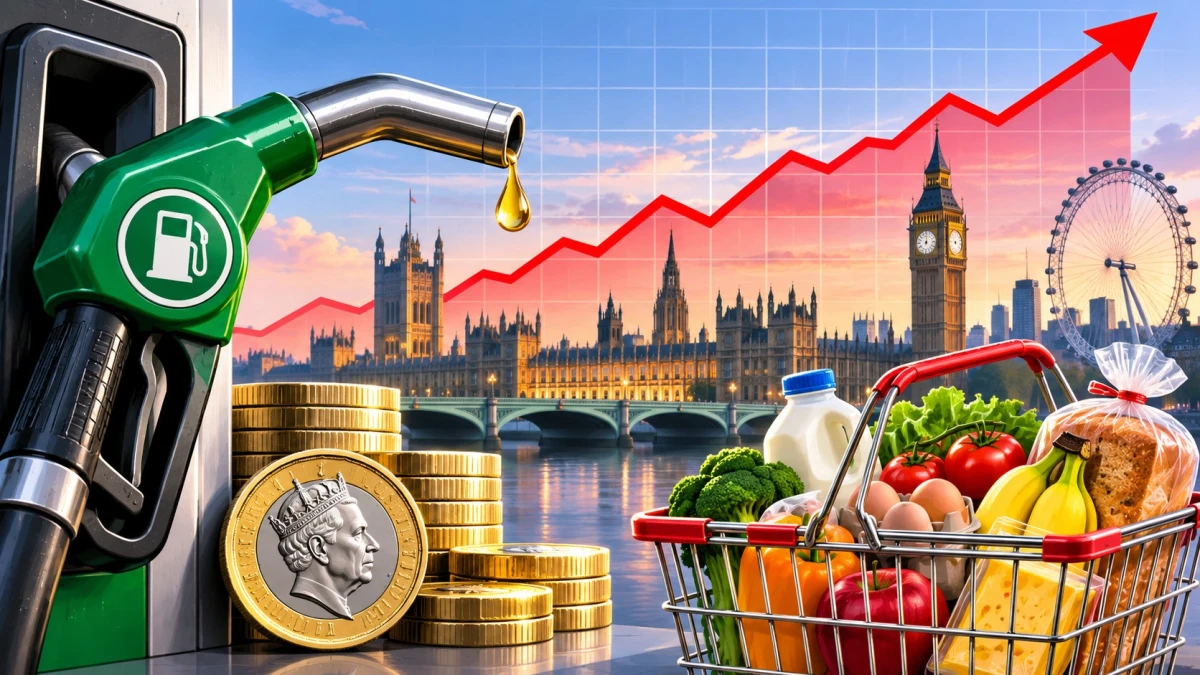
Consumer prices in the United Kingdom rose 3.6% in the 12 months to October, the fastest annual pace in a year, as motor fuel costs climbed sharply, the Office for National Statistics said on Wednesday, Nov. 18, 2026. The data were released at 7 a.m. London time, 2 a.m. ET.
The headline Consumer Prices Index (CPI) rate was up from 3.5% in September, according to the ONS bulletin. On a monthly basis, prices rose 0.5% in October, compared with a 0.4% increase in October 2025. The broader CPIH measure, which includes owner occupiers' housing costs, rose 3.7% over the year, up from 3.6% the previous month.
The October reading matched the median forecast in a Reuters poll of economists but came in below the 3.7% the Bank of England projected earlier this month, Reuters reported. It was the highest annual rate since October 2025 and the fourth consecutive monthly increase.
Fuel drives the increase
Transport, particularly motor fuels, made the largest upward contribution to the change in the annual rate, while restaurants and hotels made the largest partially offsetting downward contribution, the ONS said. Reuters reported that an increase in tobacco taxes, which took effect earlier in the year than in 2025, also pushed the rate higher.
Motor fuel prices rose 33.2% in the year to October, up from 29.8% in September and the largest annual increase since July 2022, Moneyfacts reported, citing ONS figures. The average price of diesel rose 7.0 pence per litre between September and October to 199.5 pence, the highest since ONS records began in January 1996. Petrol rose 5.2 pence to an average of 174.4 pence per litre, its highest level since August 2022.
Prices for alcohol and tobacco rose 4.5% in the year to October, compared with 2.5% the previous month, and recreation and culture prices increased 2.7%, up from 2.3%. By contrast, food and non-alcoholic beverage inflation eased to 0.9% from 1.3%, its lowest annual rate since September 2021. Deutsche Bank chief UK economist Sanjay Raja told Reuters it was unclear how much longer "fierce supermarket competition" could hold off price rises.
Underlying measures hold steady
Core CPI, which excludes energy, food, alcohol and tobacco, rose 2.8% in the 12 months to October, little changed from September, the ONS said. The CPI goods annual rate rose to 3.5% from 3.2%, while the CPI services rate was 3.7%, little changed from the prior month. Economists polled by Reuters had expected services inflation, a gauge closely watched by policymakers, to rise to 3.8%.
Core CPIH rose 3.1% over the year, also little changed from September, while the CPIH services rate was 3.9%.
Bank of England outlook
The Bank of England raised interest rates earlier this month for the first time in three years, Reuters said; Moneyfacts put Bank Rate at 4% following the move. The central bank has forecast inflation of nearly 5% in the second quarter of 2027, reflecting higher energy prices linked to the Iran war. BoE Governor Andrew Bailey has said a drop in international energy prices at the start of November came largely too late to prevent a roughly 20% rise in regulated household energy bills due to take effect in January, according to Reuters.
After the data, financial markets trimmed the probability of another rate increase at the bank's December meeting to about 80% from 90%, while still pricing three or four quarter-point hikes by the end of 2027, Reuters reported. Sterling slipped slightly against the U.S. dollar, and government bond futures rose.
"Today's slightly softer headline inflation data make a December interest rate hike less likely, but it does little to change the broader outlook," David Rees, chief economist at Schroders, told Reuters. In a statement, the Bank of England said it "will continue to set interest rates to make sure inflation returns to the 2% target and stays there."
Chief Secretary to the Treasury Emma Reynolds said after the release that the government's budget "started the long-term action needed to get energy costs down for good," Reuters reported. Britain is heavily exposed to the cost of imported natural gas for heating and electricity, and rules that delay the pass-through of wholesale price changes to household bills mean U.K. inflation tends to rise and fall later than in other countries.
Savings rates
Moneyfacts said more than 250 savings accounts available to U.K. residents now pay 5.00% or more, compared with one such account a year earlier, as providers raised rates in anticipation of higher Bank Rate. It counted 1,649 savings accounts and ISAs offering rates above the 3.6% inflation rate at the time of the release.
What's Your Reaction?
 Like
0
 Dislike
0
 Love
0
 Funny
0
 Wow
0
 Sad
0
 Angry
0

Curated by iShook Opinion and guided by Founder and CEO Beni E Rachmanov. Dive into valuable financial insights at ishookfinance.com for expert articles and latest news on finance.














Comments (0)