
Carney Says Canada and U.S. Are Making Progress Toward a Trade Deal but 'Not Yet There' as Autos Remain the Hurdle
Carney said Nov. 14 in Manila that a U.S. deal easing steel, aluminum and auto tariffs is possible but not done, as Canada wrapped up Philippines talks and substantially concluded ASEAN talks.
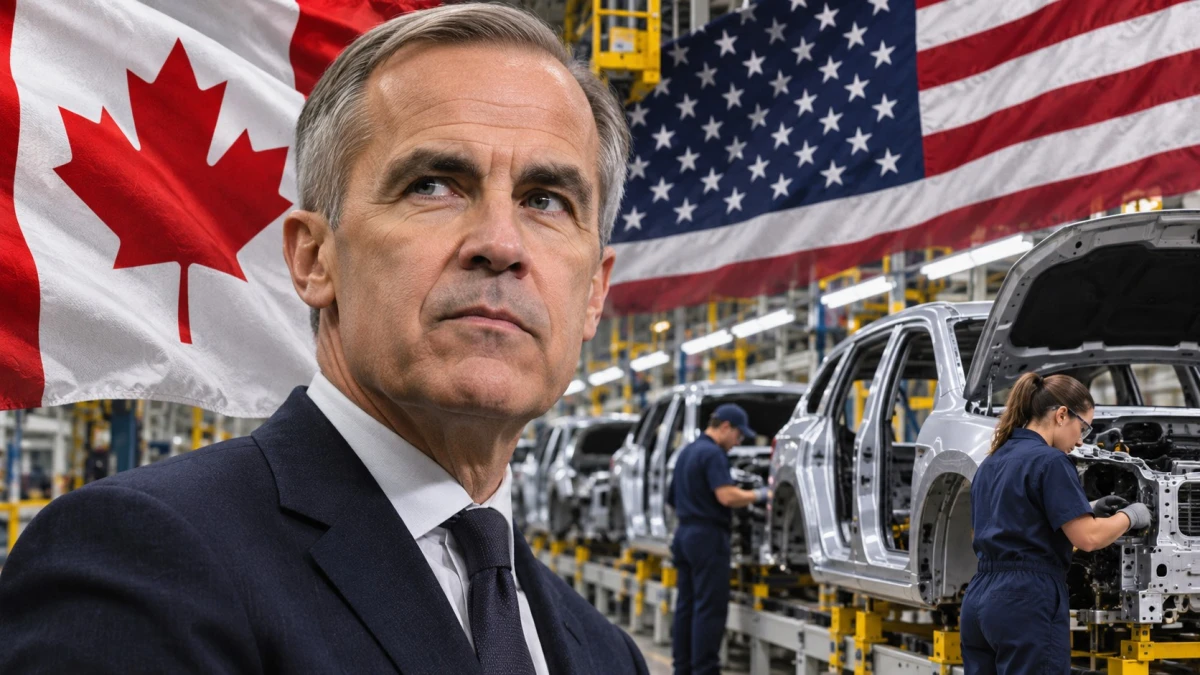
Canadian Prime Minister Mark Carney said on Saturday, Nov. 14, 2026, that Canada and the United States are making progress toward a bilateral trade agreement, three months after Ottawa walked away from negotiations, but he cautioned that the two countries had not yet reached a deal.
"We are making progress. There is the possibility of a deal, a bilateral deal, but we're not yet there," Carney told reporters in Manila, where he is attending a summit of the Association of Southeast Asian Nations, according to The Globe and Mail and The Washington Post.
A call with Trump before the trip
Carney said he held a "long, substantive conversation" with U.S. President Donald Trump just before leaving on a trip that has taken him from Dublin to Asia for three summits. White House Chief of Staff Stephen Miller and U.S. Trade Representative Jamieson Greer were among the officials on the call, The Globe and Mail reported. Greer told reporters earlier in the week that the two countries had spoken "in the past few days" on trade, according to Canada News Media, which cited reporting by The Associated Press and CTV News.
Carney said he sees a possible one-on-one agreement with Washington that would scale back the U.S. tariffs that now cover Canadian steel, aluminum and autos. The AP reported that a deal could reduce tariffs on key sectors including steel and aluminum.
Autos remain the sticking point
The prime minister called the auto talks "one of the most challenging issues in negotiations" and said the sustainability of Canada's auto industry, which depends on access to the U.S. market, is non-negotiable. "This government will not settle for a deal with the United States that does not, is not consistent with a viable Canadian auto sector," Carney said, according to The Globe and Mail. "There's lots of people who think that we should just go and take whatever deal."
He said Canada is making headway on terms within the United States-Mexico-Canada Agreement that would leave a path to profitability for Canadian vehicle production, arguing that the long-term competitiveness of the U.S. auto industry depends in part on its integration with Canada's.
The stakes for the industry are large. The Trump administration's 25% tariff on Canadian-made autos, minus a carve-out for U.S. parts, has put severe pressure on a sector that typically exports nearly 90% of its output to the United States, The Globe and Mail reported. The value of Canadian passenger car and light truck exports to the U.S. fell nearly 12% from 2024 to 2025 and is tracking lower in 2026.
In August, Washington offered to lower the headline auto tariff to 15% as part of a broader deal that would have reduced several sector-specific Section 232 duties in return for Canadian concessions, but the relief would not have extended to medium- and heavy-duty trucks. Canada suspended negotiations that month over what Ottawa considered unacceptable last-minute U.S. demands. Washington then imposed 50% tariffs on about $20 billion of Canadian goods, and Canada retaliated in September, according to the AP reporting cited by Canada News Media. The two sides have since resumed talks.
A changed political backdrop in Washington
The renewed talks come after U.S. midterm elections in which tariffs were a campaign issue. Democrats, who won control of the Senate, blamed tariffs for higher prices and pledged to challenge them, leaving Ottawa to weigh whether to accept a deal that lowers some tariffs but leaves others in place or to hold out while Congress prepares its own challenge, the AP reported. Trump had said before the elections that the countries were "very close" to an agreement.
At home, Carney's government faces pressure to protect auto jobs as Stellantis seeks to sell its idled plant in Brampton, Ontario, to armored vehicle maker Roshel Inc. Industry Minister Mélanie Joly said Friday that Ottawa, the Ontario government and the union representing workers at the plant had put "an aggressive package" in front of Stellantis to prevent the sale. Carney declined to give details.
New deals in Southeast Asia
In Manila, Carney announced that Canada had completed free trade negotiations with the Philippines and substantially concluded talks on an agreement with ASEAN, a bloc of 11 countries and nearly 700 million people, IBTimes Singapore reported. The government estimates the ASEAN agreement could raise Canadian exports by more than C$2 billion, add nearly C$2 billion to gross domestic product and support about 14,000 jobs once implemented.
The Philippines agreement covers more than 90% of tariff lines, Carney said, and Ottawa expects it to help triple Canadian exports to the Philippines by 2035. Bilateral merchandise trade between the two countries reached C$3.4 billion in 2025, up 7.4% from 2024. Both agreements are expected to be signed in 2027 before ratification and implementation.
The deals are part of Carney's goal of doubling Canadian exports to markets other than the United States by 2035. About 72% of Canada's exports went to the U.S. in 2025, according to figures cited by The Washington Post, while Carney said nearly one in three Canadian export dollars now comes from outside the U.S., the highest share in 40 years. After the ASEAN meetings, Carney is expected to attend the Francophonie summit in Cambodia and the Asia-Pacific Economic Cooperation summit in China, where he is scheduled to meet President Xi Jinping.
What's Your Reaction?
 Like
0
 Dislike
0
 Love
0
 Funny
0
 Wow
0
 Sad
0
 Angry
0

Curated by iShook Opinion and guided by Founder and CEO Beni E Rachmanov. Dive into valuable financial insights at ishookfinance.com for expert articles and latest news on finance.















Comments (0)