Russia Opens Bitcoin, Ether and USDT to Retail Investors From Nov. 17 With a 300,000-Ruble Annual Cap
A Bank of Russia ordinance taking effect Nov. 17 lets non-qualified investors buy bitcoin, ether and USDT via brokers, capped at 300,000 rubles a year per intermediary; exchange trading may start Nov. 22.
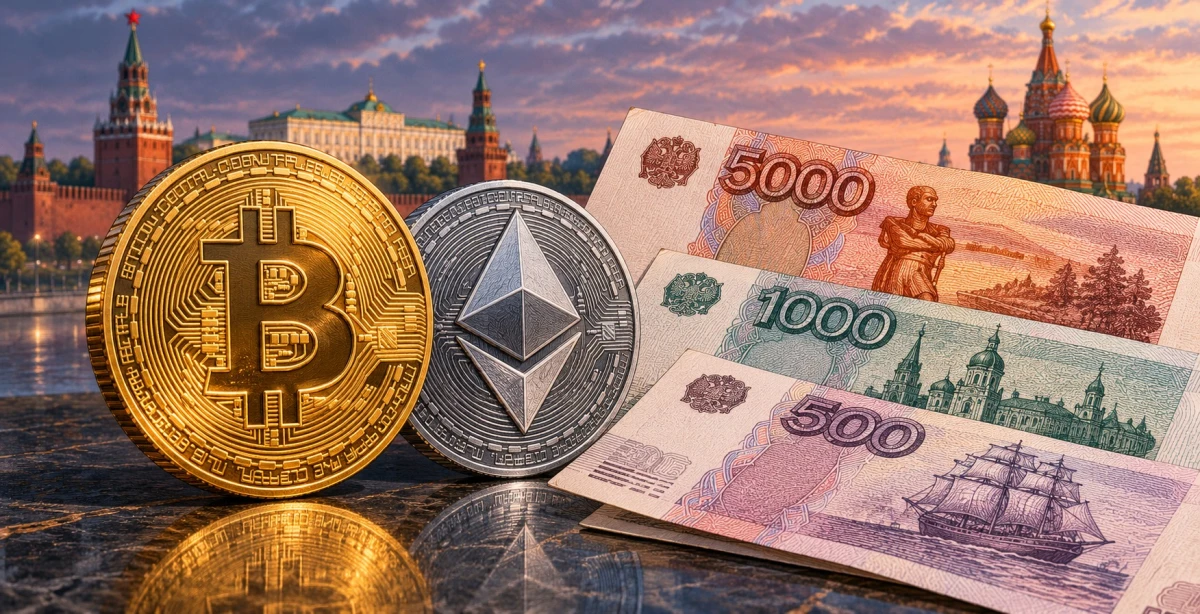
Retail investors in Russia will be able to buy bitcoin, ether and Tether's USDT stablecoin through domestic regulated intermediaries starting Tuesday, Nov. 17, 2026, when a Bank of Russia ordinance listing the three assets takes effect.
The central bank announced on Nov. 6 that it had approved the list of cryptocurrencies available to non-qualified investors, the Russian legal category that covers most ordinary savers. From Nov. 17, those investors may buy the three assets through brokers, trust managers or crypto exchange offices, on both exchange and over-the-counter markets.
A 300,000-ruble annual cap per intermediary
Purchases by non-qualified investors through any single intermediary are capped at 300,000 rubles a year, or about $3,700, according to the central bank and Cointelegraph. Qualified investors face no limit and may buy any crypto asset. Regardless of status, every investor must pass a test and review information on the risks of crypto investing before trading, the Bank of Russia said.
The cap is measured by the ruble cost of purchases made through that intermediary during the calendar year, not by the market value of an account, according to an analysis of the ordinance by Russia Economy. The final text, Ordinance 7441-U, names bitcoin and ether as digital currencies and treats USDT separately as a foreign digital instrument, the publication said.
The central bank said it chose only highly liquid assets, considering market capitalization, average daily trading volume and a pricing history of at least five years on foreign exchanges. Business daily Vedomosti reported that the thresholds require capitalization above 5 trillion rubles and average daily trading volume above 1 trillion rubles, both averaged over two years.
Exchange trading to follow
The ordinance permits trading but does not mean every venue will start on Tuesday. Russian exchanges become eligible to begin organized crypto trading on Nov. 22, provided the Bank of Russia has approved their trading rules, according to CoinDesk and Vedomosti. Cointelegraph reported that Moscow Exchange plans to launch crypto trading on Dec. 1, initially through pilot transactions in the three assets.
The rules build on legislation signed by President Vladimir Putin on Aug. 4 that created a regulated crypto market under central bank supervision. That law took effect on Sept. 1, and the Bank of Russia later authorized Sberbank, the country's largest bank, to offer crypto exchange services in October, Cointelegraph reported.
At the same time, Russia is tightening rules outside regulated channels. Direct peer-to-peer crypto trading will be banned from July 1, 2027, and using crypto to pay for goods and services remains prohibited, according to Cointelegraph. Reports differ on the timing of curbs on moving coins to self-custody wallets: Cointelegraph said transfers from regulated digital accounts to such wallets are already banned, while Vedomosti reported they will be prohibited from July 1, 2027.
Vladimir Chistyukhin, the central bank's first deputy governor, said in early October that the regulator changed its long-standing opposition because crypto assets were already widely used in Russia and cross-border payments had become harder after 2022, Vedomosti reported. He cautioned that crypto is a high-risk instrument that should not replace traditional investments.
Analysts expect gradual demand
Analysts interviewed by Vedomosti did not expect a surge of new money at first. Roman Nosov of brokerage BCS said early activity would mainly shift from foreign and unregulated platforms into the Russian system. Dmitry Lesnov of Finam said the 300,000-ruble limit would significantly restrict interest from non-qualified investors and that building full trading infrastructure could take one to two quarters, with most market participants gaining access in the first half of 2027. A VTB representative told the newspaper that the cap equals about 25,000 rubles a month and that qualified investors and companies would likely dominate trading volume.
The rollout comes during a weak stretch for crypto prices. Bitcoin traded near $64,600 early Monday after falling to about $62,100 on Sunday, its lowest level since July 14, and has declined for six consecutive weeks, its longest run of weekly losses since late February, CoinDesk reported. Ether was trading around $1,810.
What's Your Reaction?
 Like
0
 Dislike
0
 Love
0
 Funny
0
 Wow
0
 Sad
0
 Angry
0

Curated by iShook Opinion and guided by Founder and CEO Beni E Rachmanov. Dive into valuable financial insights at ishookfinance.com for expert articles and latest news on finance.















Comments (0)