Oil Tumbles About 7% as Iran Signals Openness to Talks, Pushing WTI Below $100 and Brent Toward $105
Brent and WTI fell about 7% Monday after Iran's president said the government had authority for peace talks and U.S. officials signaled a preference for diplomacy before the midterms.
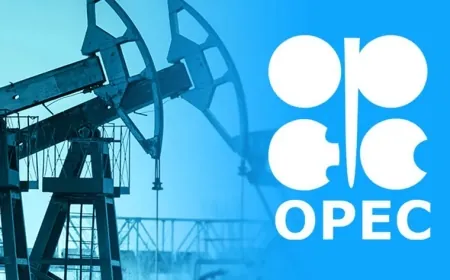
Oil prices fell sharply on Monday, November 2, 2026, as Iranian and U.S. officials signaled openness to a negotiated end to the war that has disrupted Middle East energy supplies since late February. Brent crude futures, the international benchmark, were down 7.3% at $105.14 a barrel and U.S. West Texas Intermediate (WTI) was down about 7% at $96.87 as of 11:25 a.m. ET, CNBC reported. December WTI futures were near $96.56 at about 12:05 p.m. ET, down about 7.3% from Friday's settlement of $104.12, according to Yahoo Finance data.
Earlier, by 1357 GMT, Brent had fallen $6.78, or 6.0%, to $106.65 and WTI had dropped $6.37, or 6.1%, to $97.75, with the contracts touching lows of $105.86 and $97.12, Reuters reported. Brent ended October at its highest level in six months on concerns that the conflict could escalate again after Tuesday's U.S. midterm elections, Reuters said.
What moved the market
Iranian negotiators held days of talks with Qatari mediators aimed at ending the war with the United States, and a draft proposal is being circulated with a follow-up meeting possible, an official briefed on the talks told Reuters. Iranian President Masoud Pezeshkian said Supreme Leader Ayatollah Mojtaba Khamenei had granted the government "certain authorities" regarding peace talks and that Tehran "will try to resolve the problem with dialogue," according to state media cited by Reuters.
Iran also said "intensive" exchanges were under way with Washington and offered to reopen the Strait of Hormuz under strict conditions, AFP reported. The news agency said Axios had reported that U.S. Vice President JD Vance sent a letter to Iranian national security chief Mohsen Rezaei about possible new talks.
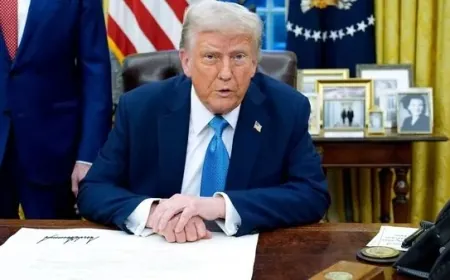
U.S. Secretary of State Marco Rubio said President Donald Trump "hasn't made a decision" on military action. "But we would prefer to do it peacefully," Rubio told reporters, according to CNBC. Iranian Foreign Minister Abbas Araghchi said an agreement is possible if Washington "demonstrates goodwill," and that Tehran expects the United States to lift sanctions, reduce its military presence in the region to previous levels and lift the blockade, CNBC reported, citing state media.
Risks that remain
Not every signal pointed toward calm. On Saturday, Khamenei called for Iran's armed forces to meet "any level or type of threat" with "an immediate, impactful, and geographically unrestricted response," CNBC reported. The talks also followed a recent increase in attacks on oil tankers passing through the Strait of Hormuz, Reuters said.
"The oil market is still reacting with extreme sensitivity to every headline out of the Middle East," UBS analyst Giovanni Staunovo told Reuters. Ryan McKay, director of commodity strategy at TD Securities, told CNBC that "so long as there is no concrete conclusion to the war, and tanker and Houthi attacks remain prevalent, we do not anticipate a complete erosion of the risk premium via diplomacy headlines alone." Arne Lohmann Rasmussen, chief analyst at Global Risk Management, told AFP: "We believe the (Trump) signals may be tactical ahead of tomorrow's US midterm elections."
Supply backdrop
The world has drained nearly 1 billion barrels from inventories since the war disrupted shipping through the Strait of Hormuz, according to Sultan Al Jaber, chief executive of Abu Dhabi's state-owned ADNOC, Reuters reported. Saudi Arabia's crude exports rose in October from September, according to two of three ship-tracking companies, despite Houthi attacks on its energy infrastructure. Goldman Sachs raised its price forecasts on Sunday and said Brent could reach $140 in 2027 if Gulf oil output stays 3.5 million barrels per day below its 2025 average, Reuters said.
Energy shares and other commodities
Energy stocks fell with crude. As of about 12:15 p.m. ET, Exxon Mobil was down about 2.7%, Chevron about 2.2% and the Energy Select Sector SPDR Fund about 2.5%, Yahoo Finance data show. U.S. natural gas futures were little changed near $2.90 per million British thermal units, while COMEX copper futures rose about 1.8% to roughly $6.58 a pound. Gold futures gained about 2% as lower oil prices eased inflation concerns.
Traders are watching Tuesday's midterm elections; Trump has said he will not attack Iran before the vote, and the oil market had priced in the risk of a major military escalation afterward, according to CNBC.
Sources
- CNBC: Oil prices fall as Iran, U.S. pursue diplomacy (Nov. 2, 2026)
- Reuters via Euronext: Oil drops 6% as Iran signals openness to peace talks (Nov. 2, 2026)
- AFP: Oil prices plunge on US-Iran detente hopes ahead of midterms (Nov. 2, 2026)
- Yahoo Finance futures and stock data (about 12:05-12:15 p.m. ET, Nov. 2, 2026)
What's Your Reaction?
 Like
0
 Dislike
0
 Love
0
 Funny
0
 Wow
0
 Sad
0
 Angry
0

Curated by iShook Opinion and guided by Founder and CEO Beni E Rachmanov. Dive into valuable financial insights at ishookfinance.com for expert articles and latest news on finance.









Comments (0)