Central Banks Buy 321 Tons of Gold in Q3 as World Gold Council Halves Investment Forecast; Gold, Silver Dip
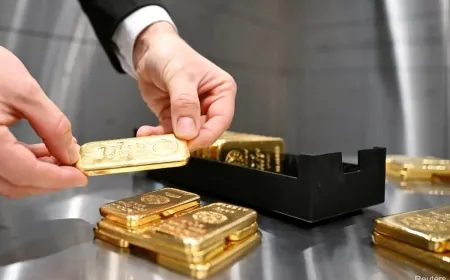
The World Gold Council said central banks bought 321 tons of gold in Q3 and cut its 2026 investment growth forecast to 200 tons, as gold and silver fell on Election Day amid inflation worries.
Central banks added 321 metric tons of gold to their reserves in the third quarter of 2026, the most in any quarter since late 2024, the World Gold Council said on Tuesday, Nov. 3, 2026, as it raised its full-year estimate for official-sector buying and halved its forecast for growth in gold investment demand. Gold and silver prices were lower on the day as higher oil prices revived inflation concerns ahead of the U.S. midterm election results.
Third-quarter demand data
Total gold demand, including over-the-counter activity, was 1,369 tons in the July-September quarter, 1% lower than a year earlier, according to the council's Gold Demand Trends report. Because the gold price averaged $4,262 an ounce during the quarter, the value of that demand rose 22% to $188 billion.
Central bank purchases of 321 tons were up 42% year on year. Buying in the first nine months of 2026 reached 675 tons, 6% more than in the same period of 2025. The council said diversification and risk management remained the main reasons for official purchases.
Physically backed gold exchange-traded funds returned to inflows after the second quarter, adding 211 tons, only 6% less than in the third quarter of 2025. Global ETF holdings rose to a record 4,256 tons. Over-the-counter and other demand was 143 tons, up from 101 tons a year earlier.
Retail demand weakened. Bar and coin purchases fell 19% to 268 tons as individual investors waited for a clearer direction in prices, with China the only major market to grow, up 7%. Jewelry demand fell 17% to 313 tons, the weakest third quarter in the council's data series, although its value edged up to $43 billion. Technology demand rose 3% to 85 tons, the highest since the fourth quarter of 2021, with electronics use up 5% to 72 tons on AI-related manufacturing.
On the supply side, mine production rose 3% to a third-quarter record of 1,071 tons, while recycling fell 8% to 314 tons, its lowest level since the fourth quarter of 2023.
Forecasts revised
In its outlook section, the council said it now expects investment demand in 2026 to finish about 200 tons above 2025, down from a previous forecast of 400 tons, because bar and coin buying slowed noticeably in the second half of the year even as ETF demand beat expectations. It raised its central bank estimate and now expects full-year official purchases to at least match 2025 levels. Jewelry demand is expected to decline for the year, technology demand to stay broadly stable, and total supply to dip slightly as low recycling offsets what could be another record year for mine output.
The council listed higher policy rates, rising bond yields and a stronger dollar as possible headwinds for investment demand in the fourth quarter, and fiscal concerns, inflation risks, geopolitics and financial market stress as possible sources of support. It said an anticipated gain in Democratic control in the midterm elections could, on balance, support gold, while noting the outcome and market reaction remain uncertain.
Prices on Tuesday
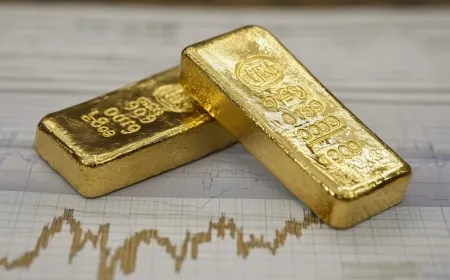
Spot gold fell 1.1% to $3,903.48 an ounce by 7:02 a.m. ET, and U.S. gold futures for December delivery were down 1.4% at $3,913.80, Reuters reported. Spot silver dropped 3.3% to $48.96, platinum fell 1.9% to $1,421.43 and palladium declined 3.1% to $939.41 at that time. Gold had gained about 2% on Monday.
Prices recovered part of those losses later in the morning. Kitco News reported spot gold near $3,965.80 and spot silver near $50.29 in early U.S. trading. Data from GoldPrice.com showed spot gold at $3,924.72 as of 10:31 a.m. ET.
Nitesh Shah, commodity strategist at WisdomTree, told Reuters that higher oil prices tend to lift inflation pressures and rate expectations, which weighs on gold. Oil had rebounded overnight after a senior Iranian official said a deal to end the war with the United States was still far off and after U.S. strikes on Iran's Qeshm Island. Traders saw a 76% chance that the Federal Reserve will raise rates at its December meeting, according to CME's FedWatch tool, as cited by Reuters.
Kitco said markets are also watching a busy week of U.S. data, including Wednesday's October ISM services index and Friday's October employment report, ahead of the Fed's Dec. 8-9 meeting.
Sources: World Gold Council Gold Demand Trends Q3 2026 press release and outlook, Nov. 3, 2026; Reuters via Kitco, Nov. 3, 2026; Kitco News, Nov. 3, 2026; GoldPrice.com, Nov. 3, 2026.
What's Your Reaction?
 Like
0
 Dislike
0
 Love
0
 Funny
0
 Wow
0
 Sad
0
 Angry
0

Curated by iShook Opinion and guided by Founder and CEO Beni E Rachmanov. Dive into valuable financial insights at ishookfinance.com for expert articles and latest news on finance.










Comments (0)